The $2BN Airport Built in a Swamp
- Youtube Views 2,070,260 VIDEO VIEWS

18 February 2026
Video narrated and hosted by Fred Mills.
India is building its answer to Changi.
It’s called Navi Mumbai International Airport (NMIA) and phase one of the project opened to passengers in December last year.
Once the final phase of work is complete, NMIA will welcome an astounding 90 million passengers a year, 20 million more than Changi.
Comparing any airport to Singapore's jewel is cause for raised eyebrows - it's arguably the best facility of its kind in the world. But remember, all airports start somewhere - Changi was a military airbase long before it became a world leading civilian facility.
However, the engineers behind Navi Mumbai could only dream of building on top of an airbase: their reality was entirely different. They were tasked with developing an airport on a swamp covered in unstable mud flats, a giant hill and a river flowing through the middle of it.
While the renders of Navi Mumbai International look spectacular, the airport’s location has been an absolute nightmare.

Above: A render of Navi Mumbai International Airport terminal 1. Image: Zaha Hadid Architects.
The Mumbai problem
India has one of the fastest growing aviation sectors on the planet, behind only China and the US.
The number of operational airports in the country has doubled in the last decade, as Prime Minister Narendra Modi looks to overhaul India’s travel infrastructure, and yet Mumbai, its financial powerhouse, is under-resourced.
A number of the world’s most prominent cities feature multiple major airports which is crucial for visitor numbers, business trips and cargo. As an example, London is serviced by six major airports. All of those facilities combined handled a whopping 177 million passengers in 2024.
Mumbai, however, has historically had just one major airport.
That would be like London having just Heathrow; the city would miss out on nearly 100 million passengers a year and given India’s rapidly growing aviation sector, the country is desperate to improve capacity to its financial capital.
The answer that India’s authorities came up with was simple - a second major airport for Mumbai - but executing an idea of this scale is rarely as straightforward as having the epiphany itself.
The biggest problem faced by Mumbai’s second major airport plan is experienced by major cities around the world: space.
Mumbai Airport is already at capacity. Terminal 1 is going through a redevelopment but there isn’t a lot of scope for expanding the footprint. On every side, there are densely packed communities that would be a nightmare to move and it’s not like they didn’t try - the evidence is found at Terminal 2.
The concourses are asymmetrical. The initial plan was for them to be the same length but because of the challenges faced in moving communities on the airport boundary, the second concourse had to be redesigned.

Above: Mumbai Terminal 2 features a short second concourse because of the limited land space.
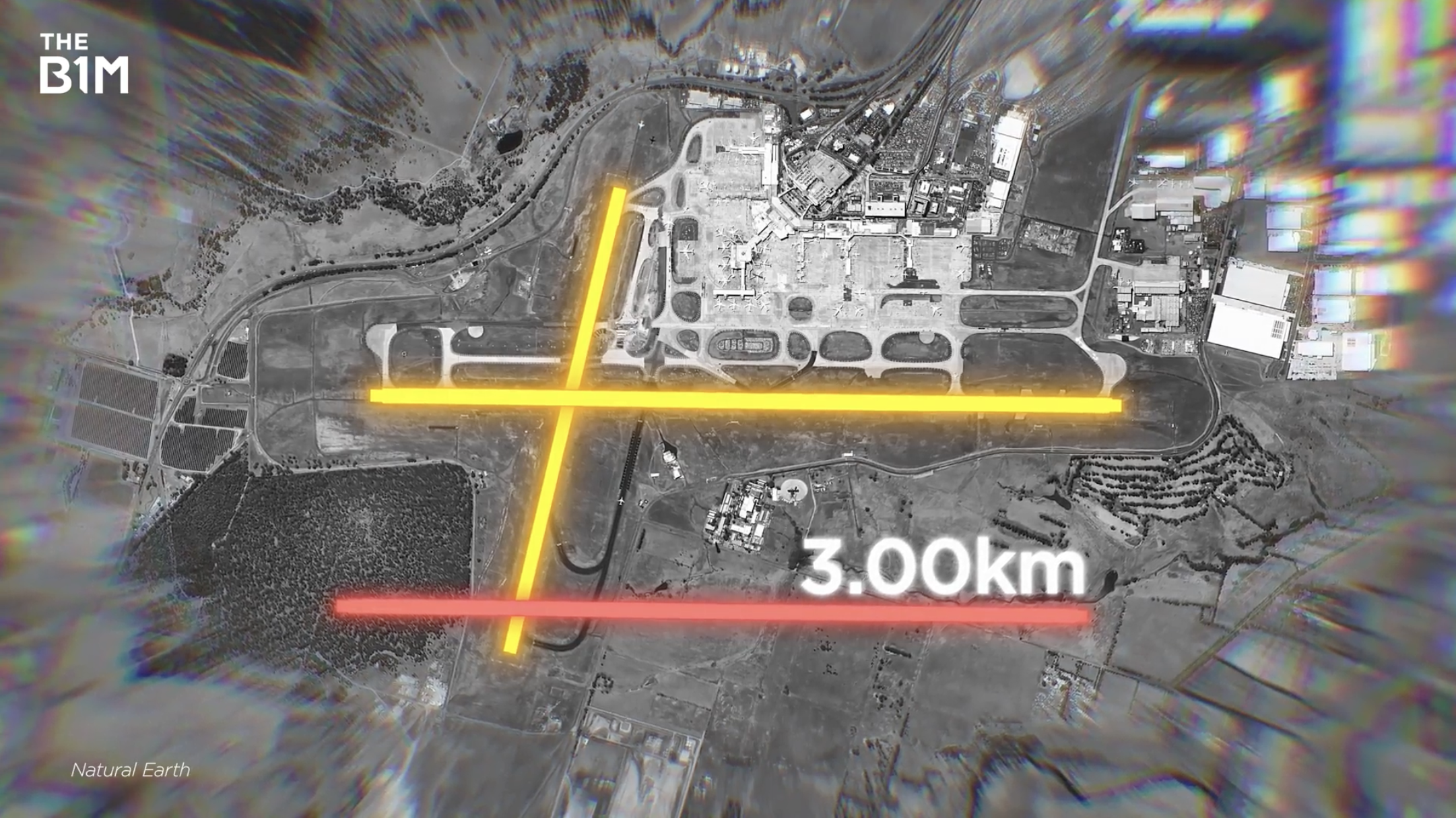
Aircraft traffic is also limited because of the intersecting runways. The design stops planes landing and taking off on each strip at the same time and as we’ve made clear, there’s very little space to build parallel runways elsewhere.
Mumbai is missing out on potentially millions of passengers and tonnes of cargo every year and the city’s key airport is crying out for help.
A major expansion is out of the question and so is any notion of developing another massive airport anywhere near the city centre - so where do you go?
Getting away from the city
Following a ten year search for a home for the new airport and a further three year process to buy land, officials ended up in Navi Mumbai, about 40 kilometres away from the old commercial centre of Mumbai.
In what has become a growing trend over the last decade, the Navi Mumbai International site is on the coast and it’s built on largely reclaimed land that required a lot of preparation.
Before any work could begin on laying the foundations in 2018, three key hurdles needed to be tackled:.
- Ulwe Hill
- Swamp land
- Ulwe River
Ulwe Hill
Right in the middle of the site for the new airport was Ulwe Hill - 92 metres of solid rock.
To create space and clear the air-path, it needed to be completely flattened before any building work could take place. Construction crews demolished 62 million cubic metres of rock through controlled blasting to protect the surrounding villages.
But what do you do with all of that blasted rock?
Swamp land
The material was repurposed. Hundreds of acres of this airport is constructed on swamp land, covered in mud flats and mangroves that needed to be levelled and stabilised.
To do so, they raised the ground by about six metres using the newly sourced rock. Teams blasted Ulwe Hill at specific explosive power designations to create rock fragments the ideal size for land development and reclamation.
The blasted rock was dumped into marshy areas, puncturing and displacing the soft clay. The weight of the rock compacted the soil to make it strong and in turn limited the amount of intensive treatment needed to thicken any remaining weak ground.
Ulwe River
Before site work began, Ulwe River cut right through its centre. Engineers were left with little choice but to completely reroute it.
The river was moved to the airport boundary, cut on a right angle to navigate around the site and it wasn't just relocated: it was expanded.


Above: Ulwe River cut through the centre of Navi Mumbai International Airport site and so it was redirected.
NMIA is surrounded by villages whose people have watched this site completely transform but within those communities, there’s a very real concern about flooding.
Swamp and wetlands absorb water through the vegetation and soft soil but large swathes of that land have been filled in with non-absorbent rock, leaving villagers wondering where water will run during heavy rainfall. It's why Ulwe River has been widened and deepened.
In some areas it’s grown from 25 metres wide up to an impressive 200 metres wide. The hope is that the larger river area will control excess water during floods.
Welcome to Navi Mumbai International
Following seven years of construction, the first phase of the airport opened on Christmas Day 2025 and features a control tower, a single runway, a fire station and terminal one.
Already, Navi Mumbai Airport is able to serve 20 million passengers a year and half a million metric tonnes of cargo but by the end of phase five in the 2030s, this airport will be unrecognisable.
The site will be enhanced with a second parallel runway, three more terminals and additional cargo capacity.
Designed by Zaha Hadid Architects, it’s modelled to resemble a lotus flower, the national flower of India.
The foundations are developed using high strength reinforced concrete and precast panels to speed up construction. It’s a really impressive accomplishment given the incredibly impractical site condition at the start of the process.
At the front, twelve columns shaped like unfolding petals diffuse light into the terminal as part of a striking two-tier system. Seventeen giant columns are then hidden behind them to take the incredible weight of the 370-metre canopy roof.

Above: Navi Mumbai International Airport is inspired by a lotus flower. Image: Adani.
The curved roof is created using a steel framework, supported by a network of steel girders and cladding. Each section acts like a petal, formed using large span rectangular steel trusses.
The trusses are capable of supporting great weight and in doing so, they limit the number of interior structural columns. The goal was to create a beautiful, open space with natural light flooding through the sky lights.
But those curves in the roof are about a lot more than just giving passengers something pretty to look at. They actually catch and channel monsoon rainwater, while reducing wind resistance.
What's the problem?
Understandably, moving away from the hustle and bustle of central Mumbai offers room to play with but what makes less sense is the very limited travel infrastructure leading to this now open and active airport.
A new network of roads has been built but for the time-being but there’s no rail access. There are reports the mobile connectivity is pretty poor so communicating with app-based transport systems is a real challenge and the taxi system is facing delays.
A metro line is planned between the old airport and Navi Mumbai International but that won’t be ready for a number of years.
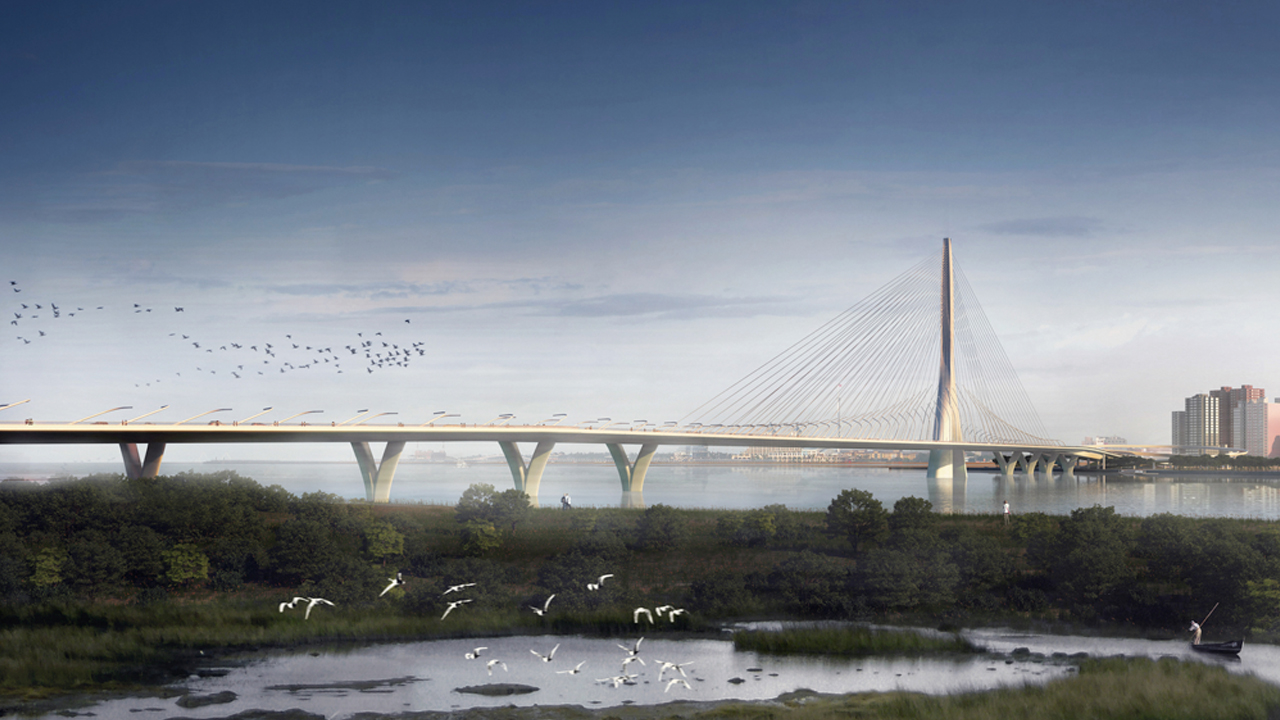
The one silver lining is the impressive Trans Harbour Link, the country’s longest sea bridge opened in 2024, connecting Mumbai with Navi Mumbai.
But the journey to the new airport by car can take up to three hours from some suburbs of Mumbai and that’s the last thing you need ahead of hopping on a long haul flight.
Navi Mumbai International isn’t the first airport to face teething issues after opening (and it absolutely won’t be the last) but following a decades-long wait for Mumbai to open a new airport, it feels slightly rushed.
The search for a building site found swamp land with a giant hill and a river flowing through its centre and now, the airport has opened without any rail access.
Although let's be clear, we’re still at phase one of the project. Navi Mumbai International has an incredibly exciting future and it looks like one of the world’s fastest growing aviation economies could be about to reach new heights.
Additional footage and images: Adani, Zaha Hadid Architects, Narendra Modi, Nise leisure, CNN-News 18, Aakash Bhavsar, Ten Studios, Ethan’sphotography 82, Deeptec, Mint, NDTV Profit, Innocentbunny.
We welcome you sharing our content to inspire others, but please be nice and play by our rules.
Comments