
The $14BN Race To Save New Orleans
- Youtube Views 0 VIDEO VIEWS

04 November 2026
Video hosted by Fred Mills. This video contains paid promotion for eSIM io.
NEW Orleans is ‘beyond the point of no return.’
The city has a vast network of flood defences protecting it from a repeat of the devastation seen following Hurricane Katrina. But even with that, it’s on borrowed time.
In fact, a new report has concluded that the entire New Orleans metropolitan area, comprising over a million people, needs to start planning a mass relocation now.
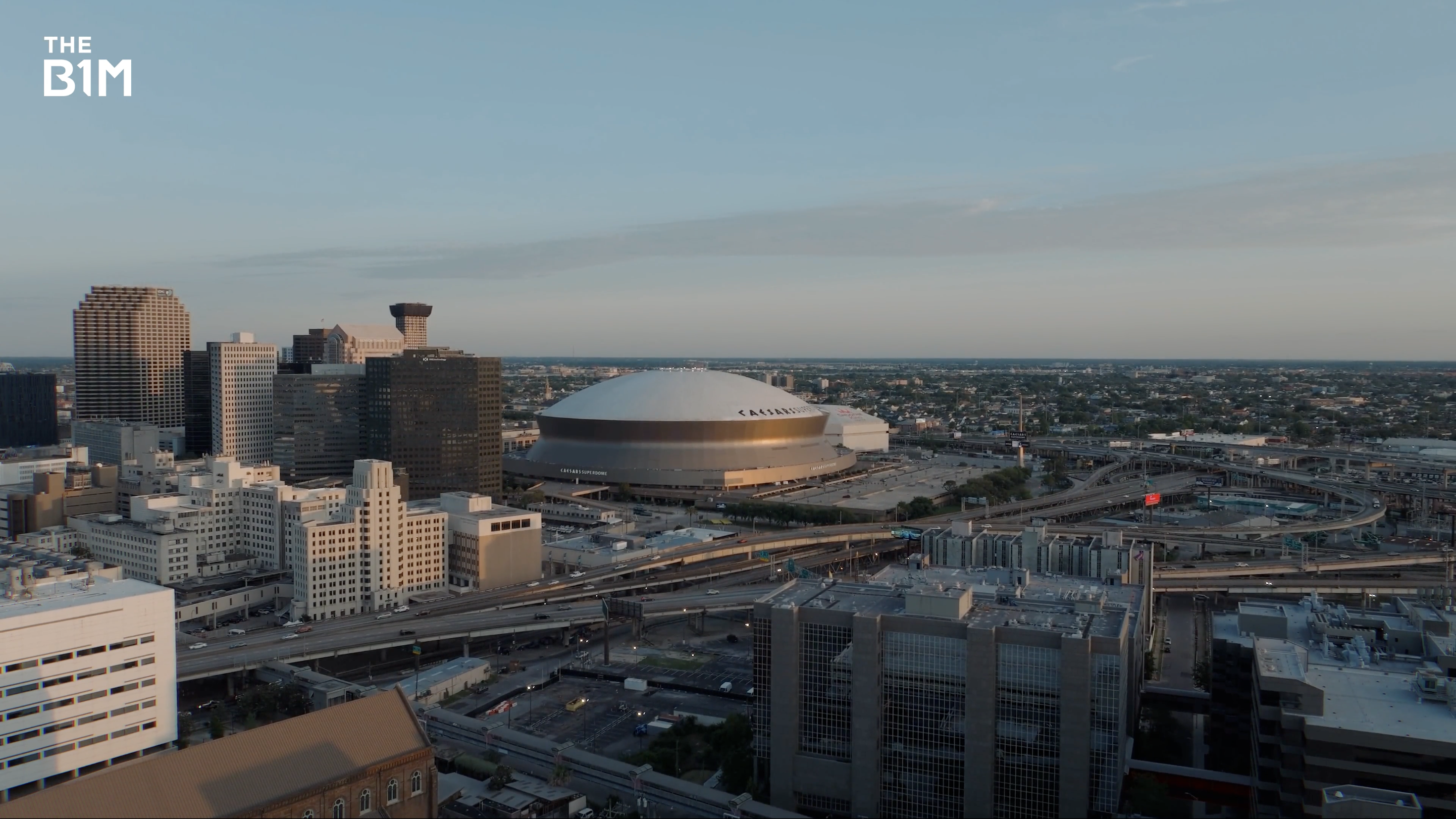
Above: The skyline of New Orleans' Central Business District.
New Orleans current flood defence network is over 350 miles long and cost $14BN to build. But large parts of it are sinking into the soft Louisiana soil even faster than originally anticipated and the cost to keep the network functional is skyrocketing.
With hurricanes in the Gulf of Mexico getting more intense by the year, and Louisiana losing a football pitch’s worth of land to the sea every ninety minutes, New Orleans is facing an impossible decision.
Stay put and keep the faith? Or start planning for the unimaginable?
THE BIG EASY
New Orleans is a city that punches well above its weight when it comes to impact on American culture. Mardi Gras, jazz music, shrimp gumbo, and maybe a certain amphibian-based Disney movie are just a few of the things that’ll jump to mind.
A big part of what makes the Big Easy stick so firmly in the popular imagination is how much pride its people take in their home. But they’ve also been through a lot.
Despite all of the positive connotations of New Orleans, it’s inseparably associated with one of the most destructive natural disasters in American history.
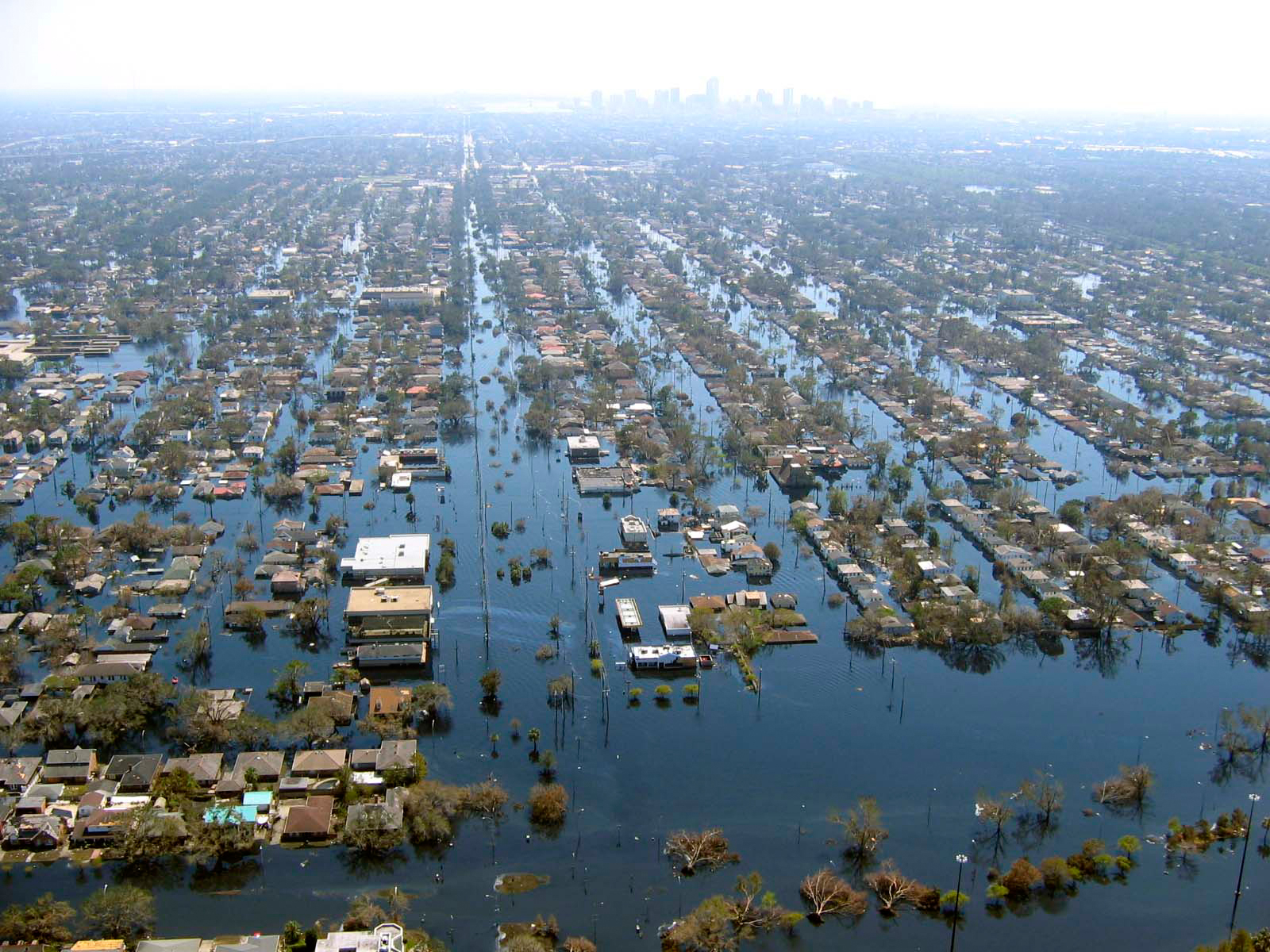
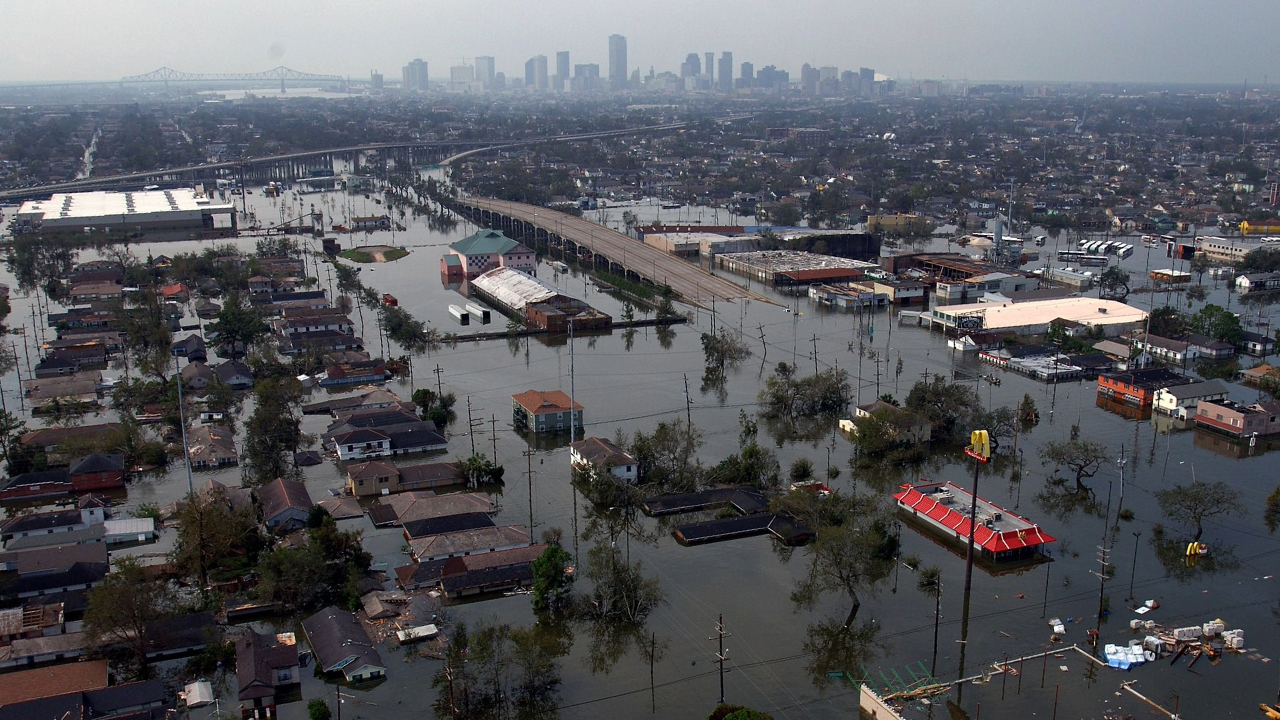
Above: A flooded New Orleans after Hurricane Katrina.
Within hours of Hurricane Katrina making landfall in Louisiana on August 29th, 2005, most of New Orleans was underwater, causing over $100BN worth of damage and around 1,400 deaths.
In the aftermath, most of the blame for the unprecedented levels of destruction was placed on the widespread collapse of the levee system which was meant to protect the city.
“So what actually caused the defences to fail in many cases was overtopping.” explains Jaap Flikweert, a Flood and Coastal Management Advisor at Haskoning who was contracted by the US Army after Katrina to advise on the new Risk Reduction system,
“So the water level simply being too high or waves crashing over the defenses, causing scour on the landward side.”
“The defences not being built or designed to withstand that overtopping. And then what happened in many, many cases was catastrophic failure. They just went, creating a tidal wave.”
In a report published a year later, the US Army Corps of Engineers, who were responsible for the flood defences, admitted that faulty design specifications and poor construction contributed to the levee failures.
So when Congress approved the funding for a whole new slate of defences in the aftermath of Katrina, the pressure was on the Corps to build them to a higher standard than the last set.
THE NEW DEFENCES
The Hurricane and Storm Damage Risk Reduction System is made up of over seventy individual projects and with that $14BN price tag, it’s one of the largest civil engineering projects ever undertaken by the Army Corps.
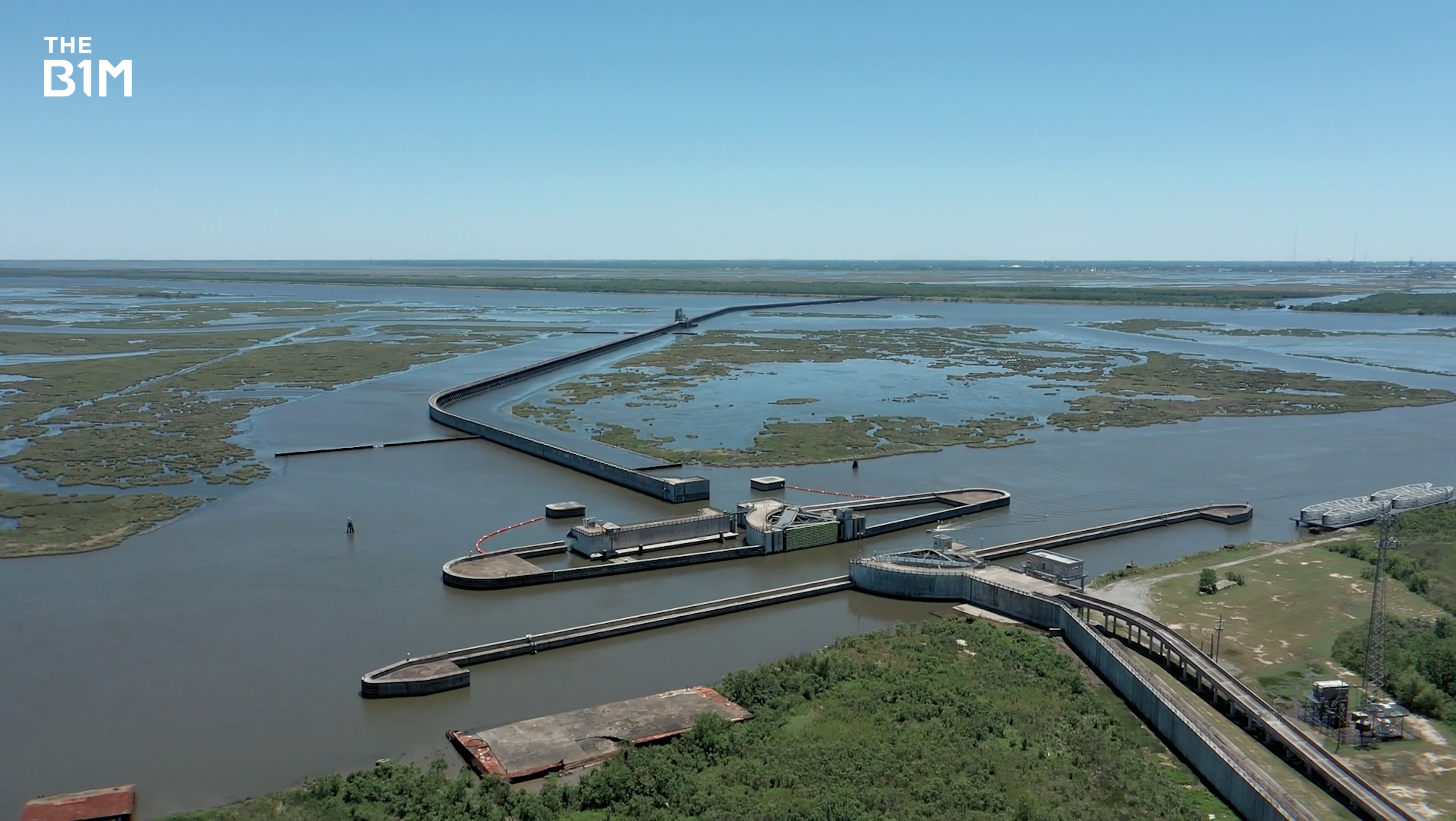
Above: The Lake Borgne Surge Barrier.
The crown jewel is The Lake Borgne Surge Barrier, locally known as The Great Wall of Louisiana, straddling the New Orleans section of the Gulf Intercoastal Waterway. At almost two miles long, and twenty-six feet above sea level, it’s the largest surge barrier of its kind in the entire world.
It was also constructed while being designed, to minimise the chance of any delays to such a vital structure. That massive wall is held up by 628 steel tubes, which need to be at an exact depth and angle to make sure they can hold back the storm surge – these were pushed down into place with a pile driver.
The wall features three massive floodgates. The first is the 56-foot wide Bayou Bienvenue Sector Gate. When a storm is on the way, the gate is dropped thirty feet into the water to block storm surges and protect vulnerable areas of South Eastern Louisiana, including New Orleans.
Then you have two more 150-foot wide steel sector gates on the opposite bank of the Waterway, which also shut to provide additional protection.
This all works in tandem with the Seabrook Floodgate Complex ten miles away. That one may only be sixteen feet tall and cost a paltry $165 million, but it’s another vital part of the system.
It has a 95-foot-wide gate with two 220-ton pie-shaped wings which swing shut during a storm and two vertical lift gates which get dropped fifty feet into the water.
Seabrook stops water rushing in from Lake Pontchartrain while the Great Wall blocks surges from Lake Borgne and the Gulf of Mexico. That turns a vulnerable interior canal nearby New Orleans into a totally sealed-off basin, reducing the need to rely on older flood defences further inland.
Remember these are just two parts of the overall Risk Reduction System. With all its individual projects combined, it gives the entire New Orleans area a 1-in-100 year level of storm protection. As Flikweert explains, this metric is slightly different to what you might think.
“So the 1% means you try to understand what a storm is with an exceedance chance of one percent per year in this case. And then you design your structure to withstand that condition with enough confidence.”
The HSDRRS was fully completed by the Army Corps in 2018 and has functioned as expected since then, notably defending the New Orleans area from more severe flooding when Hurricane Ida hit in 2021.
But, even with all of this, the report isn’t mincing its words. New Orleans is going to be permanently flooded in just a few decades, so there’s no time to waste in getting everyone to safety.
THE VIEW FROM THE BAYOU
However, local officials have been sceptical to say the least.
The mayor of New Orleans called the report much too concerned with generating ‘clickbait headlines’ and the chairman of Louisiana’s Coastal Protection and Restoration Authority called it ‘the most ridiculous study I have ever seen.’
Dr. Jesse M. Keenan, one of the authors of the report, has responded to the criticism, stating “It’s very much what one would expect from politicians.”
“In New Orleans, they have a massive fiscal crisis. They have a debt crisis.
“They’ve got more short-term needs and priorities that they need to focus their energy on.”
“It’s entirely unfair to label this body of research clickbait [...] We need to think about what we can do to extend the life of this region and to provide protection, adaptation investment, civil infrastructure investments, flood protection and the like. But also prepare for population mobility.”
Last year, a $3BN project to restore sediment to the wetlands was cancelled by the state’s governor, who cited its high cost as the primary reason. It’s nature-based projects like these that the study highlights as vital to slowing down sea level rise and buying as much time as possible for relocation.
For the moment, the plan appears to be to trust in the existing defences, repairing and improving them as needed over the next decades, at the very least. But, as is often the case with projects of this size, even that’s much easier said than done.
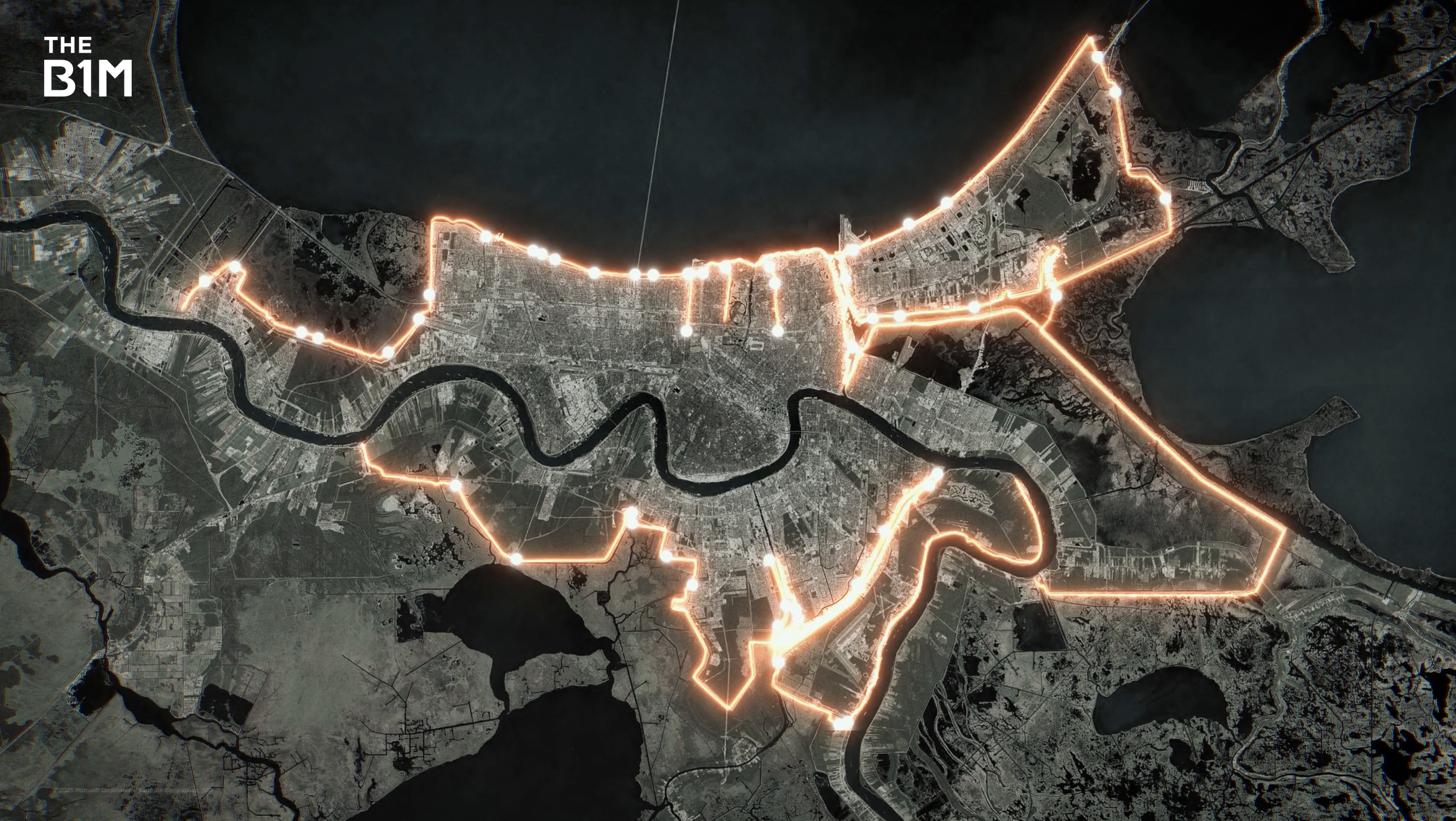
Above: An overhead map of the Hurricane and Storm Damage Risk Reduction System.
When the defence network was being designed and built back in the late 2000’s, the quality of the Louisiana soil was already being taken into account.
Those harder structures like the surge barrier were deliberately overengineered to protect against subsidence and are, speaking quite broadly, fine for now.But other parts are sinking much quicker than anticipated.
In 2019, just one year after the project’s completion, the Army Corps published a report stating that some of the levees were subsiding so badly that they could cause the network to fall below its previously guaranteed level of protection in as little as four years.
Their proposal was a $3.2BN plan to lift the levees in what is a highly complex process.
It involves getting diggers in to clear out the grass and dirt around the existing levee, then cutting it into steps to stop the new soil from sliding off.After that, you ship in clay from off-site and use special rollers to bind it as tightly as possible to the new levee.
And then all you have to do is carry out that process for every current levee in this 350-mile long system at periodic intervals over the next fifty years.
By the time Congress had approved the funding in 2023, the final cost had jumped up to $5.3BN.
But, regardless of all this, the study claims that regardless of how much money gets poured into maintaining the defences, relocation is necessary.
And it wouldn’t be the first time Louisiana has done it.
MOVING INLAND
Eighty-one miles south of New Orleans sits the coastal island of Isle de Jean Charles.
First settled in the 1830s, it was only accessible by boat from the mainland until a bridge was built over a hundred years later.
The island is even more vulnerable to flooding and subsidence than the surrounding areas, with longstanding oil and gas drilling in the region accelerating the problem. It’s lost 98% of its landmass to the Gulf of Mexico in the last seventy years.
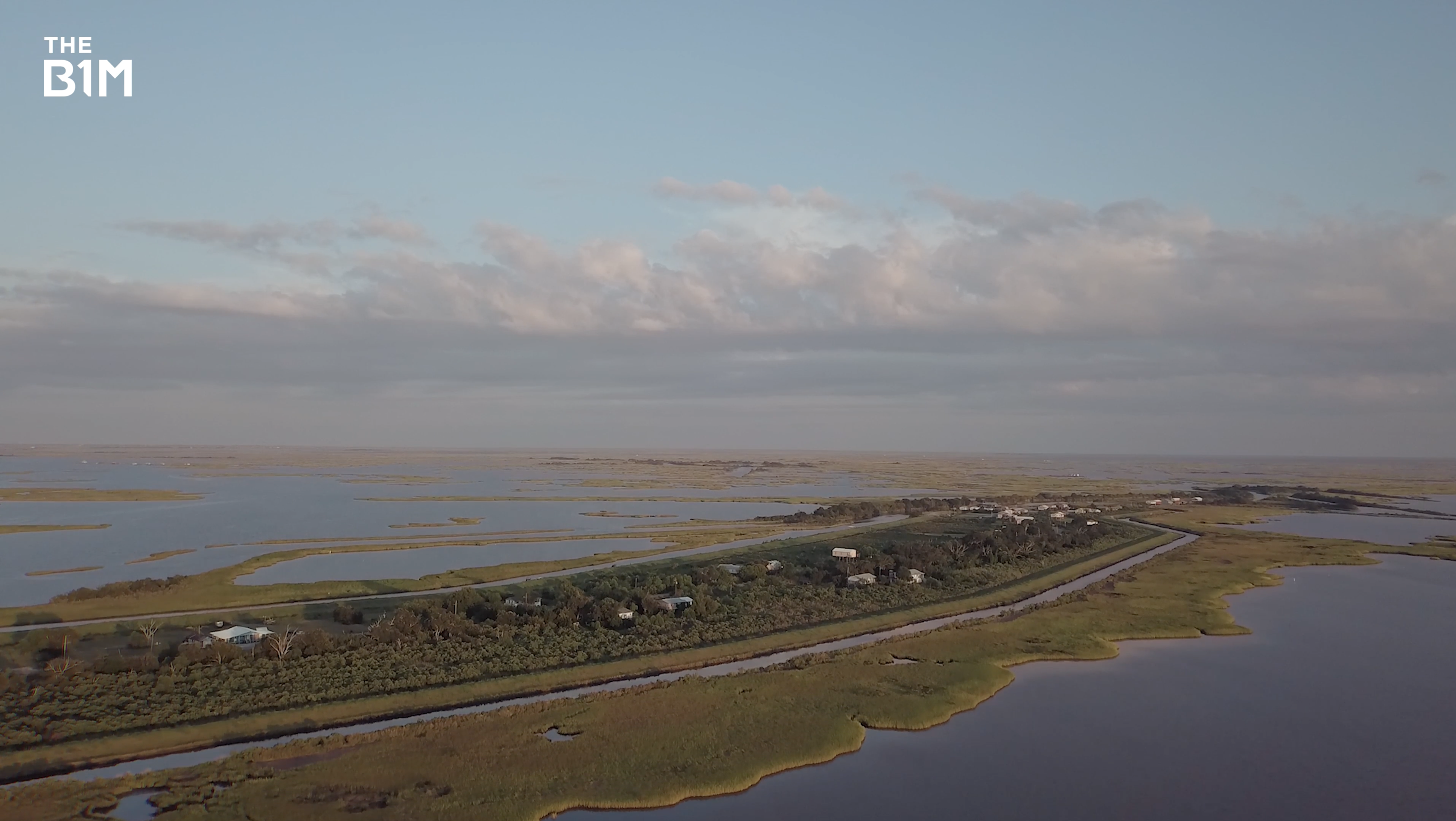
Above: Isle de Jean Charles.
In 2016, $48 million was granted by the federal government to the Louisiana government so it could permanently relocate the 100 or so people still living on Jean Charles.
A site forty miles inland was chosen and Louisiana constructed thirty-four new homes in total, with what it said was a goal to ‘evoke a way of life experienced and loved by current and former residents of the island’.
The state government also said it wanted to ensure the homes ‘reinforce the community’s deep connection to nature by using appropriate forms for south Louisiana’s climate, as well as lasting and quality materials’.
But it hasn’t exactly all gone to plan. The local community have alleged that they weren’t properly consulted by the state government on how that money for their relocation was spent. Some have also claimed that the build quality of their new homes hasn’t reached the promised standard.
Dr. Keenan has also expressed skepticism, saying “Isle de Jean Charles is a unique case where you have a relatively isolated population.Really quite small, and indeed that was a trial and error process. That was an experiment, didn’t work out so well.”
“I’m not sure that’s really the case we want to look to as a potential model moving forward.”
Even if you don’t end up relocating every single person in the entire New Orleans metropolitan area, the price tag will probably run quite a bit higher than $48 million. For reference, Indonesia is building itself a new capital city as Jakarta also struggles with its own subsidence problem, and even the most conservative estimates put the final bill for that at $35BN.
That’s all combined with the fact that the Jean Charles resettlement was entirely voluntary, which is really what’s at the heart of this issue.
You can throw out all the statistics you like, use all the most complex models possible to back up your evidence, but at the end of the day, convincing people to leave behind their homes and their communities for an uncertain future further inland is always going to be challenging.
The study does suggest a few ‘receiving zones’ that the population of New Orleans and other parts of Louisiana could potentially move to, based on its projections for sea level rise of three metres and of seven metres.
A lower rise would see displaced people likely moved to the nearby cities of Baton Rouge or Lafayette, while that higher level would potentially see towns like Covington - with just 11,000 people - inundated by millions of new arrivals from all over South Eastern Louisiana.
Some have already taken it upon themselves to move out and there’s always a spike in the number of people leaving Louisiana for good after a natural disaster.
The state has had a substantial population decline problem for the last few decades. New Orleans specifically has nearly 100,000 fewer people living there today compared to twenty years ago.
Those who haven’t left have to deal with a cost of living around 14% higher than the US average, public services struggling for funds partly thanks to the population drain, and skyrocketing rates for home and flood insurance due to the city’s high disaster risk.
A report published last year by First Street, a climate research group, projected that increased disaster risk alone could cause property insurance rates in New Orleans to rise 200% by 2055.
This might be one of those situations where there’s no answer that’s right for everyone. New Orleans either keeps pouring billions into defences which need constant repair, or spends potentially even more trying to move over a million people to safety in a kind of operation which has never been attempted before.
It could very well lead to the permanent loss of people’s homes, communities, and a culture which has already been through so much.
The bottom line is that whatever the government decides to commit to in the next few decades will seal this city’s fate, come hell or high water.
Stay connected with eSIM io using code THEB1M20 👉 https://esimio.onelink.me/Lltr/TheB1M
Additional footage and images: US Army Corps of Engineers, Fox News, ITV News, The Walt Disney Company, CNN, The Weather Channel, C-SPAN, 4WWL+, WGNO/ABC.
We welcome you sharing our content to inspire others, but please be nice and play by our rules.
Comments