
The £49BN Plan to Fix Europe's Most Divisive Airport
- Youtube Views 1,682,464 VIDEO VIEWS

24 August 2026
Video hosted by Fred Mills. This video contains paid promotion for KiwiCo.
HEATHROW is the most important airport in Europe. In fact, it might just be the most important airport in the world but there’s a problem: it’s at breaking point.
Welcoming nearly 85 million people through its gates in 2025, it's the busiest airport on the continent but that's about three million more passengers than it was ever designed to handle. Add the fact that in 2025, nearly £300 billion worth of goods was handled at Heathrow - and around 75% of all UK air cargo - and the issue becomes impossible to ignore. A big expansion is well overdue.
The UK government has been dragging its feet over a major upgrade for decades. One leader supports the expansion, the next is against it, and on we go - but that could be about to change. Fresh plans have been submitted to overhaul Heathrow for an eye-watering £49 billion and ministers have promised to accelerate the process. Heathrow might, finally, be heading for an overhaul.

Above: Heathrow is one of the most important airports in the world.
The Heathrow problem
There are two main types of passenger airports. The first is a point-to-point model, mostly offering direct flights from an origin to a destination. They’re secondary to major facilities and often prioritise shorter trips with low cost carriers. For examples of point-to-point systems, look at Chicago Midway, Luton or even Gatwick.
The second is a hub. These are essentially huge sorting centres, operating as central transfer points for long-haul connections across the globe. Hartsfield-Jackson, Chicago O’Hare, Amsterdam Schiphol, Changi - these are all hubs.
London Heathrow (LHR) is the UK’s only hub and there are a few reasons we confidently call it one of the most important airports in the world. The first is geography. By luck, the UK is in an ideal location to connect North America with Asia, Europe and Africa. But beyond connections elsewhere, LHR also happens to be in London, the third most travelled-to city by international visitors in 2025.
Heathrow is the best connected airport on the planet, three years running, boasting more than 59,000 possible connections to 226 destinations. The site is incredibly busy but comparatively tiny so its size constraints create value. There are only so many flights that can take off and land on the runways in the course of a day and so airlines buy operating time slots from each other. And because demand at Heathrow is so high, its flight slots are the most valuable on the planet.

Above: Europe's second busiest airport is in Istanbul. Despite processing similar passenger numbers, it's more than six times larger than Heathrow.
In 2016, Oman Air paid a reported record breaking £55.5 million to KLM for a pair of morning slots at LHR. For context, the previous world record was nearly £40 million paid to SAS for a pair of slots in 2015. That was also at Heathrow.
According to the airport's owners, there’s a risk that if this expansion doesn’t happen soon, the airport may lose its mega hub status. That’s in part because competitors in Paris, Frankfurt, Madrid and Amsterdam are all planning to enhance major facilities to absorb future demand.
Many of Heathrow's competitors feature three or more runways; in theory, the more landing strips you have, the higher your landing and takeoff capacity. Heathrow has just two runways. While it has experienced upgrades over the last few decades - in the background baggage systems are overhauled, terminals are modernised and facilities are given a new lease of life - to actually get more people to these gates, they need more planes to land.
To support that aim, early in 2025 the UK’s Labour government committed to finally making a Heathrow expansion happen. By summer that year two plans had been proposed - one by the owners of the airport, and another by Arora Group, headed by the hotel tycoon Surinder Arora. While differing in cost and scale, the upper figure sitting at a meaty £49 billion, both plans recommended building a third runway to increase capacity. The government chose to support the plan proposed by the airport’s owners.
The expansion plan
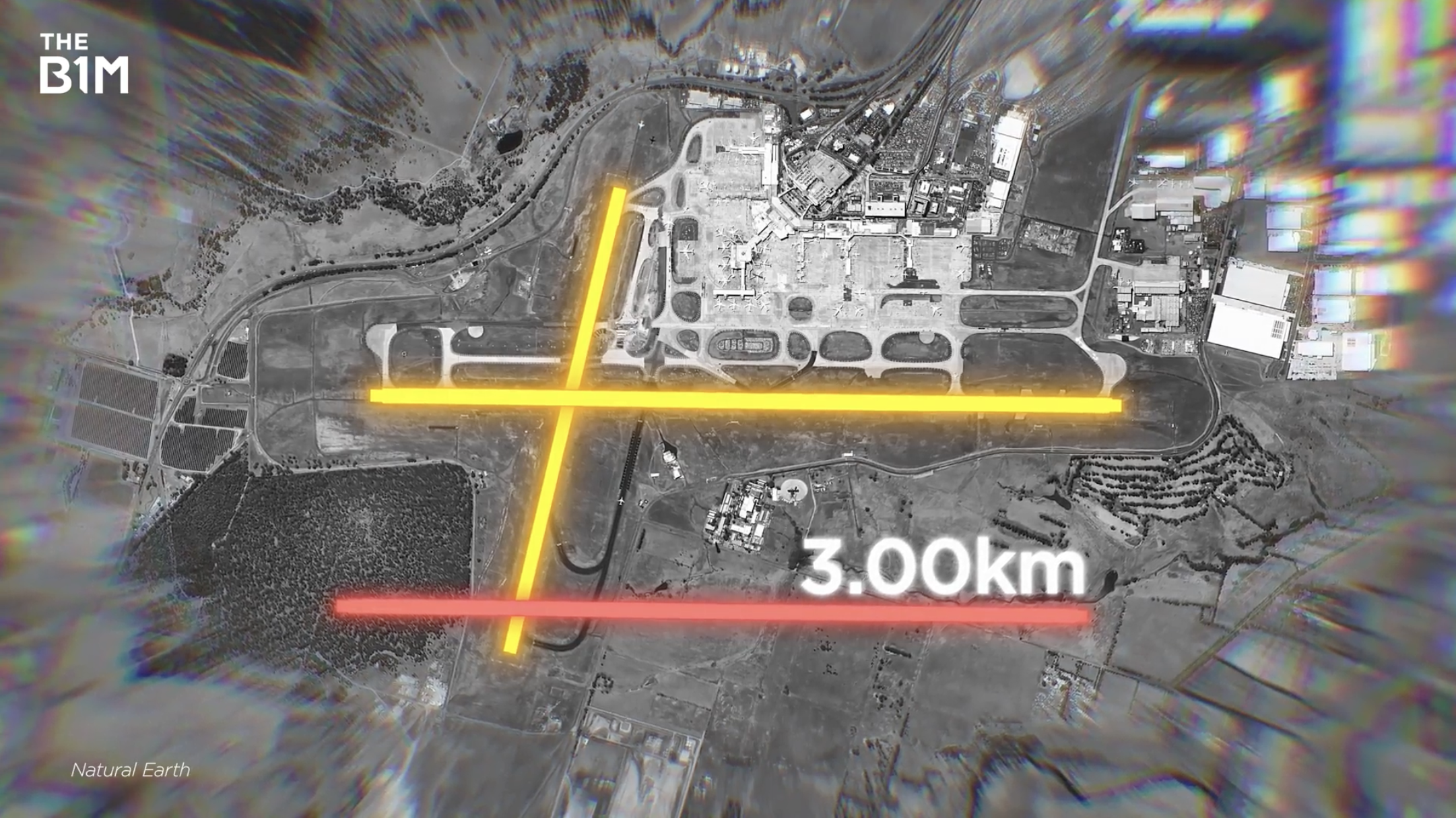
The boundaries to the north of the site would increase to construct a new third runway. Stretching 3.5 kilometres, compared to 3.9 and 3.7 for the previous strips, the airport’s owners claim it’ll increase capacity to a whopping 756,000 flights and 150 million passengers a year.
That’s up from 480,000 flights and 84.5 million passengers now. The idea is that aircraft will land about 550 metres further west on the new runway which will allow them to stay at a higher altitude over residential areas. But before landing paths can be considered, the tarmac needs laying and it'll carve through existing road infrastructure.
The M25 would have to move about 130 metres to the west and a new section of motorway will be constructed offline. The current motorway would be left as is until the new alignments are completed to limit disruption. The road will be widened between junctions 14 and 15 with the A3044, the A4, the T5 spur road, the Southern Perimeter Road and a number of surrounding roundabouts and junctions realigned.

Above: As part of the Heathrow Airport Limited plan, a number of roads would be reconfigured around the airport's boundaries.
New link roads should simplify movements between the M25 and the M4 to limit weaving and improve safety. That new section of M25 will include a road tunnel underneath the third runway. The tunnel itself would likely be constructed using cut and cover which is a method in which you excavate a trench, build a reinforced concrete box to encase the road infrastructure and then fill in the soil on top of it.
Next are the passenger processing areas. Multiple new satellite terminals would be constructed including one new major terminal called T5X, to the west of the already existing T5. Terminal 2 would be expanded, leading to the closure of the oldest terminal - sorry to any T3 fans out there.
Elsewhere, new freight warehouses would be erected to the south to increase cargo capacity by a whopping 50% and there’d be a new truck park to stop heavy vehicles parking overnight on local roads. The expansion goes on to include enhanced rail capacity, improved bus and coach services and a better pedestrian experience. But we’ve been here before. In fact, for decades the UK has been desperately failing to overhaul its most important airport.
It's in the wrong place
The key reason for delays is simple - as Former Transport Secretary Justine Greening once said: Heathrow is built in the wrong place. Prior to the Second World War, Europe’s most important hub was a modest private airport, home to one small grass runway for building and testing aircraft.
The government turned it into an airbase during the war but post 1945 there wasn’t really a need for RAF Heston anymore. The aerodrome was handed to the Air Ministry to create a new civilian airport for London. Decades later, that origin has caused some pretty fundamental problems. Landing at Heathrow is incredible because of the sweeping views of the city you get as the plane descends but those views are an issue. Planes generally try to land into the wind as a safety strategy as it helps maximise lift and slow down their approach, and it’s no different at Heathrow.
The UK’s prevailing wind is from the south-west meaning planes descend from the east and that’s directly above one of the world’s busiest cities. As a result, Heathrow has strict overnight restrictions which drastically limits capacity and, to protect flight paths, London can’t build anything taller than the Shard. During the day, jets swirl over the city, polluting suburbs with fumes and noise.

Above: Heathrow Airport is built to the west of London, leading to aircraft descending over densely populated areas.
So, why develop a major airport here? Well, this only became a civilian airport in 1946, with the first permanent passenger building at Heathrow opening in 1955. With the aviation boom in the decades that followed, it saw organic growth.
But the journey to expanding Heathrow with a third runway wasn't linear. A recurring suggestion in political circles is that a massive airport could be created in the Thames Estuary. Possibly the most famous example was Boris Island, named after former Prime Minister, Boris Johnson.
However, in 2014 the Airports Commission, charged with answering London’s aviation dilemma, dismissed a Thames Estuary airport. They claimed it would cost at the very least £70-90 billion to build with £30-60 billion of public money. Originally, the Commission came up with three options: A new landing strip at Gatwick Airport, a third runway at Heathrow or simply lengthening an existing runway. An additional runway at Gatwick would have cost less but the facility handles merely a fraction of the long-haul flights that Heathrow does. It’s not nearly as well connected to London and the rest of the world. Although, separately, a privately funded £2.2 billion plan to enhance Gatwick was given the go-ahead by the UK government last year.
The body’s final report backed a third landing strip because it offers higher capacity and could be built further to the north and west to limit disruption over London.
Of course, there’s no denying the enormous negative impact an airport can have on surrounding areas. Hundreds of homes would need to be demolished to construct the third runway proposed by Heathrow Airport and the additional capacity means more planes, which could cause increased noise and worse air quality. For decades, communities around the airport have been blighted by third runway plans, with little certainty about the future. Historically a number of homeowners struggled to sell their properties, leaving them feeling trapped. A decision, one way or another, would at least provide some clarity.
On the other side of the coin, Heathrow is a huge source of employment and income for nearby communities. Nearly 100,000 people work within its boundaries, making it an economy in its own right. Over the years, various unsuccessful attempts have been made to expand the site and those failures largely come down to a common theme: UK politics.
A very 'UK' issue
Discussions to expand Heathrow began all the way back in the 1980s but legitimate consideration didn’t come to pass until the early 2000s. In 2003, the airport’s owners sought approval for a third runway and that gained support in the government’s Aviation White Paper. By December that same year, then Transport Secretary, Alistair Darling said he expected a new runway to be constructed within 12 years.
Fast forward to 2009 and the plan was approved by Labour Prime Minister Gordon Brown, even though some of his own party were completely against the move.
So, it’s no surprise that in 2010, Conservative leader David Cameron was elected PM and cancelled the plans, calling Gordon Brown pig-headed for backing them. However, jump just two years down the line and Cameron changed his mind, saying he wouldn’t stand in the way of the Heathrow owners bringing a new proposal forward. But history repeats itself and members of his own party weren’t so keen.
Come 2015, future Conservative PM Boris Johnson threatened to lie down in front of bulldozers to stop construction of a third runway. Three years later, a Commons vote in 2018 supported an expansion of Heathrow: 415 in favour and 119 against.

Above: Former Prime Minister, Boris Johnson has historically opposed a third runway at Heathrow. Image: Number 10
But of course, by 2020 the plans were blocked by the Court of Appeal because the UK forgot to account for its commitment to the 2015 Paris climate agreement. Later that same year the Supreme Court took that decision and overruled it, allowing a new proposal.
Fast forward to today and, as outlined earlier, the government has thrown its backing behind the third runway plan proposed by Heathrow Airport Limited. It’s hard to overstate how contentious this project is – as soon as one leader shows support, there’s a handful who oppose it and vice versa.
But, for the time-being, we have a plan the government actually supports. Although don't forget, it's projected to cost a whopping £49 billion.
What now?
We’re told financing of the expansion won’t be a taxpayer problem. Heathrow Airport Limited (HAL) says it will privately fund its plan and £15 billion of the overall figure is for modernising current facilities.
The group also said redeveloping the airport would grow the UK economy by 0.43% GDP. However, the UK government now says a third runway would only add about a tenth of the financial return projected by the airport itself - a boost of just 0.05% per year. Heathrow says the Department of Transport’s projection is very narrow and doesn’t take all factors into consideration.
But even now, those calculations might not matter. Within the last few months, British Airways, Virgin Atlantic, the ground handling experts Swissport and director general of the International Air Transport Association, Willie Walsh, have thrown their backing behind Arora Group’s shorter runway plan. If the government backed proposal manages to muddle its way to planning approval, there’s no denying spending a massive sum like this is a big gamble. There’s no guarantee of success, no going back and £49 billion isn’t a small figure.

Above: A render depicting what Heathrow Airport would look like following construction of HAL's plan. Image: Heathrow Airport.
Of course, any planning application will need to meet the standards set out in the Heathrow expansion national policy statement (HENPS). Previously known as the ANPS, the draft HENPS was published in summer 2026 and while it might sound dull, it’s actually really important.
Any Heathrow expansion planning application has to meet four government tests on climate change, air quality, noise and economic growth, as set out in the HENPS. (For clarification, this policy document doesn’t grant planning permission itself - it’s a national framework, a bit like a rule book describing what a Heathrow expansion can and can’t do.)
That’s going through a consultation period at the moment and it’s set to become a finalised policy document by the end of 2026, or so it’s hoped. We’ve been stung by this process so many times before. Earlier this year, members of the Labour leadership and leader of the opposition, Kemi Badenoch, saw eye to eye on the need for an expansion of the UK’s most important airport bBut who knows what the situation will be by 2029 - that’s the date by which the government plans to make a final decision on any planning applications. The UK has a tendency to ditch its Prime Ministers with the changing of the wind.
The whole Heathrow fiasco is the perfect example of why the UK struggles to complete major infrastructure and publicly, intense opposition still remains for the entire expansion. Campaign groups include people who don’t want to lose their homes and environmentalists who fear for the impact increased air traffic will bring - even if HAL claims the expansion goes ‘hand in hand’ with the airport’s aim of being net zero by 2050.
Consultations continue and the aim is for consent to be offered before 2030. A third runway would then open by 2035 but given our recent history, don’t hold your breath. After a long, long four decades of deliberation, it’s time the UK government made a final decision. After all, the future of our country’s most important airport depends on it.
Inspire the future engineers of tomorrow with KiwiCo by using code THEB1M for 50% off your first monthly crate. Just head to http://kiwico.com/theb1m to get started!
Additional footage and images: Heathrow Airport, BBC, ITV, The Guardian, The London Standard, British Film Institute, Dave Planes, Thomas Nugent, Konstantin Von Wedelstaedt, Cargospotter, Chris Hoare, World Economic Forum, Channel 4, Clay Gilliland and Conservatives.
We welcome you sharing our content to inspire others, but please be nice and play by our rules.
Comments